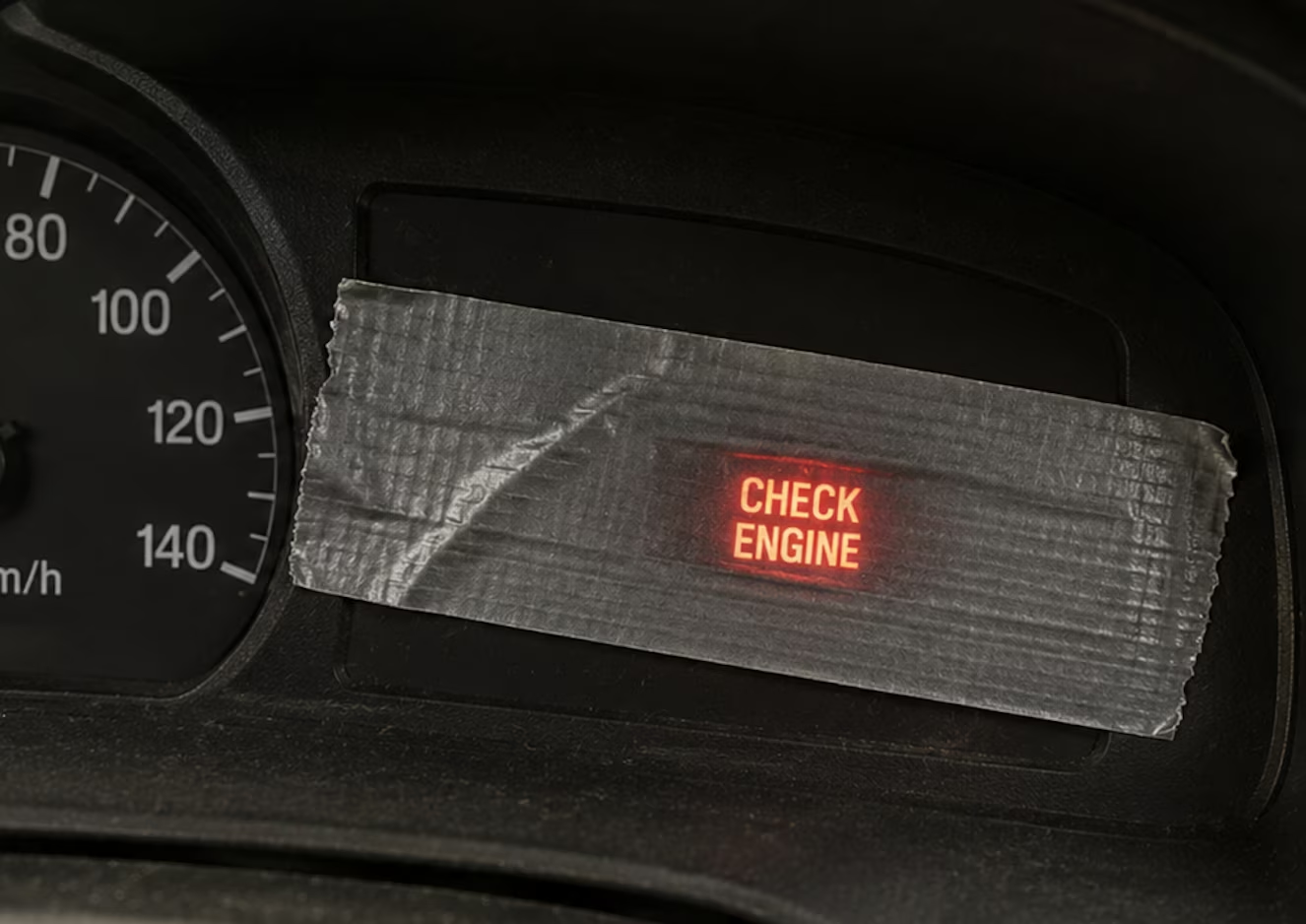









There's a specific kind of frustration reserved for brands with genuinely superior products. You've done the hard part. The engineering, the certification, the testing. Then you put it on Amazon and watch it lose, week after week, to products you know are worse.
We worked with a brand in exactly that position. Certified product, measurably better performance, real credentials behind it. Sitting below cheaper rivals that had none of that. Some of the products outranking it weren't certified at all.
The brand's instinct was the common one in Amazon product launch strategy, which is that this was a marketing problem needing more ads. It wasn't. The product was never the problem and neither, really, was the marketing budget. The problem was that nowhere on Amazon did the listing explain why this product deserved to cost more.
That's the gap most launch plans never close, so it's worth pulling apart.
Superiority you don't explain doesn't exist
In a showroom, a good rep closes this gap for you. They put the certificate in the customer's hand, point at the performance figures, explain what the cheap version skips. On Amazon there is no rep. There's a thumbnail, a title, some bullets and whatever A+ content you bothered to make.
The customer comparing you against a cheaper rival sees two products that look roughly the same. One costs less. Unless the listing does the rep's job, the decision takes four seconds and it doesn't go your way.
Certifications are the sharpest example. To an engineer, a certification is the whole story. To a shopper scrolling on their phone, it's an acronym in bullet three, if it's mentioned at all. The certification only sells when the listing translates it: what was tested, what it actually saves the customer, what the uncertified version can't claim.
Better products don't announce themselves. Listings do. And a listing that stays silent about superiority is, for all commercial purposes, a listing for an ordinary product at a strange price.
What we actually changed
Nothing about the product. Everything about how it was presented.
The listing got rebuilt from the search data up. Titles carrying the terms people genuinely typed. A main image built to survive next to the cheaper rivals in results. Comparison content that put the certified and uncertified options side by side, politely, and let the difference speak. And A+ content leading with the certification as a benefit rather than a badge, with the performance claims made concrete.
The bullets stopped listing specifications and started answering objections. "Why does this cost more" is the question every premium product has to answer on the page, and most never do. The specification sheet moved down the page where the engineers who want it can find it, and the buying argument moved up where the humans are.
Then, and only then, advertising. Structured against the terms and the competitors the research had already identified, with budget concentrated where the rebuilt listing could convert.
What happened
Within 30 days the product was #8 in its category. The advertising held a ROAS above 4, which tells you the clicks were landing on a page that could close them. Sales were up close to 90% in under twelve weeks and the product became the best seller in the brand's range.
Read those numbers again with the timeline in mind. Thirty days. Twelve weeks. This wasn't a slow rebrand paying off over a year. When a strong product has been losing purely on explanation, fixing the explanation moves fast, because the demand was there all along. It just kept converting on someone else's listing.
That's also why the ROAS held up. Ads don't perform because bids are clever. They perform because the click lands somewhere that finishes the sale. Same traffic, different page, completely different economics.
The uncomfortable question for your own catalogue
If you sell a premium product on Amazon, open your best-seller's listing on your phone and ask one question. If I knew nothing about this brand, could I tell from this page alone why it costs more than the option below it in the results?
Not "is the listing tidy". Not "are the images high resolution". Could a stranger reconstruct your superiority argument from the page? Most brands we meet fail this test, and they fail it while spending real money on ads that drive perfectly good traffic into the gap.
The pattern repeats across nearly every account we take on. Weak comparison story. Certifications buried. A+ content that decorates instead of persuades. Ads pushing traffic at all of it anyway.
And underneath it, often, a channel problem making everything worse. If unauthorised sellers hold your buy box with a butchered version of your story, even a perfect listing can't save you, which is why we treat presentation and channel control as two halves of the same job.
Launching premium on Amazon, in one sentence
Work out the argument for your price before day one, build the entire listing to make that argument without you in the room and only then spend on traffic. There's a fuller pre-launch checklist in what actually matters when launching on Amazon, and this piece is really one item on it, expanded. The item most premium brands skip.
Your product probably deserves to win. If the listing isn't making its case, that's a fixable problem, and usually a faster fix than people expect.



.png)
.png)

.svg)