








At some point a distributor will sit across the table from you and ask for exclusivity on Amazon. The pitch is always smooth. One partner, one buy box, no more chaos, sign here.
Your instinct will be to hesitate, and your instinct is right.
Exclusive distribution on Amazon is the single most valuable thing a brand can grant a partner, and it's routinely asked for by people who haven't earned it and don't intend to. We say that as a company that holds exclusivity for the brands we run, so we've no quarrel with the arrangement itself. Handing it to the wrong partner, on the wrong terms, with no proof and no exit, is how brands end up trapped watching one mediocre seller squat on their entire Amazon revenue.
Here's the standard we think you should hold anyone to, including us.
Why the pitch and the reality diverge
Understand what exclusivity is worth to the person asking. A protected buy box, a defensible margin and a brand doing the hard work of making the product desirable. It's the best deal in ecommerce, which is exactly why so many distributors chase the exclusivity while quietly declining the responsibility.
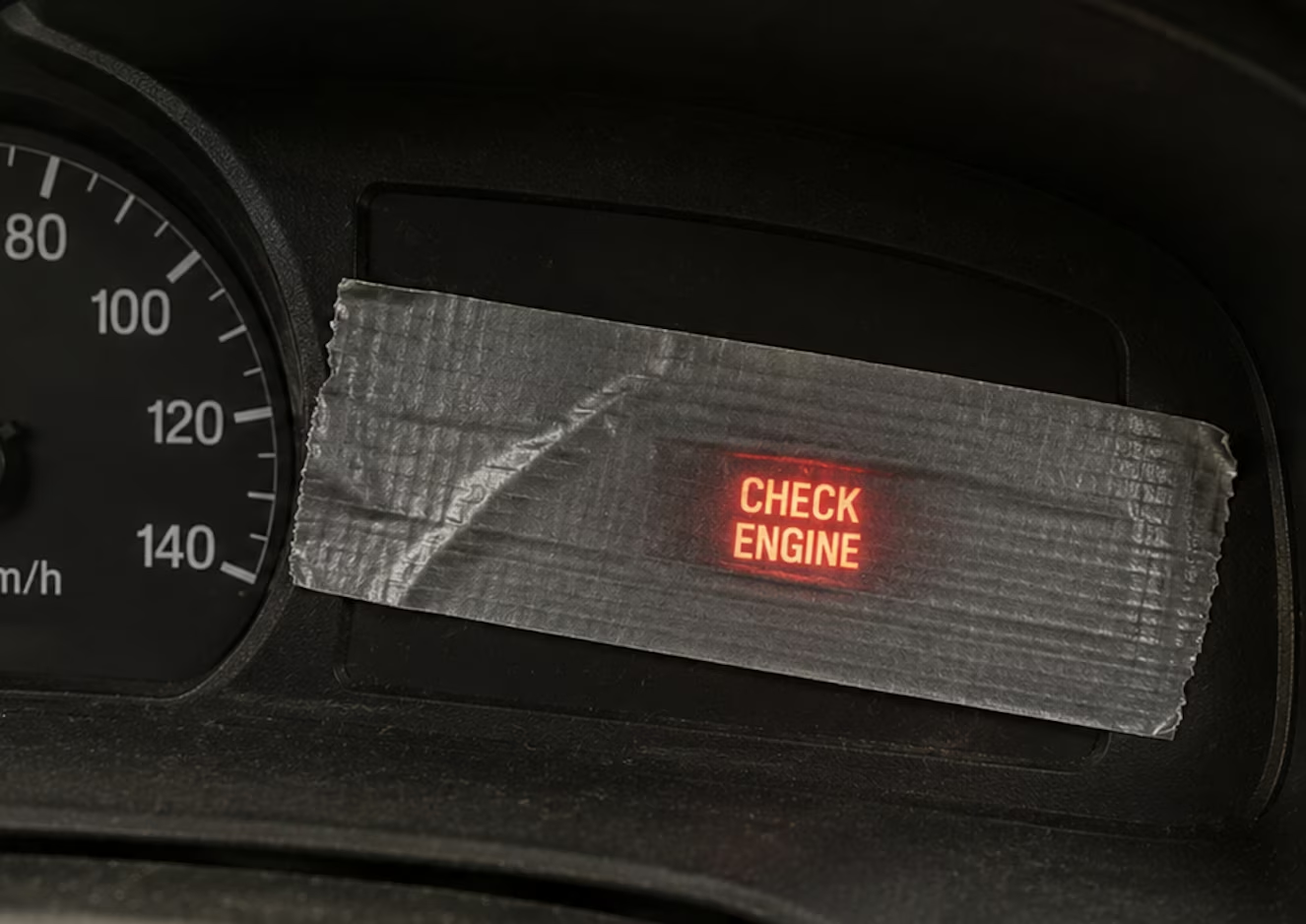
The pattern is depressingly consistent. The deal gets signed. The distributor lists your range, sets a price and moves on to pitching the next brand. No A+ content. No advertising. No new images. No plan for the reviews. Your Amazon channel is now one company's afterthought, and because you granted exclusivity, you can't route around them.
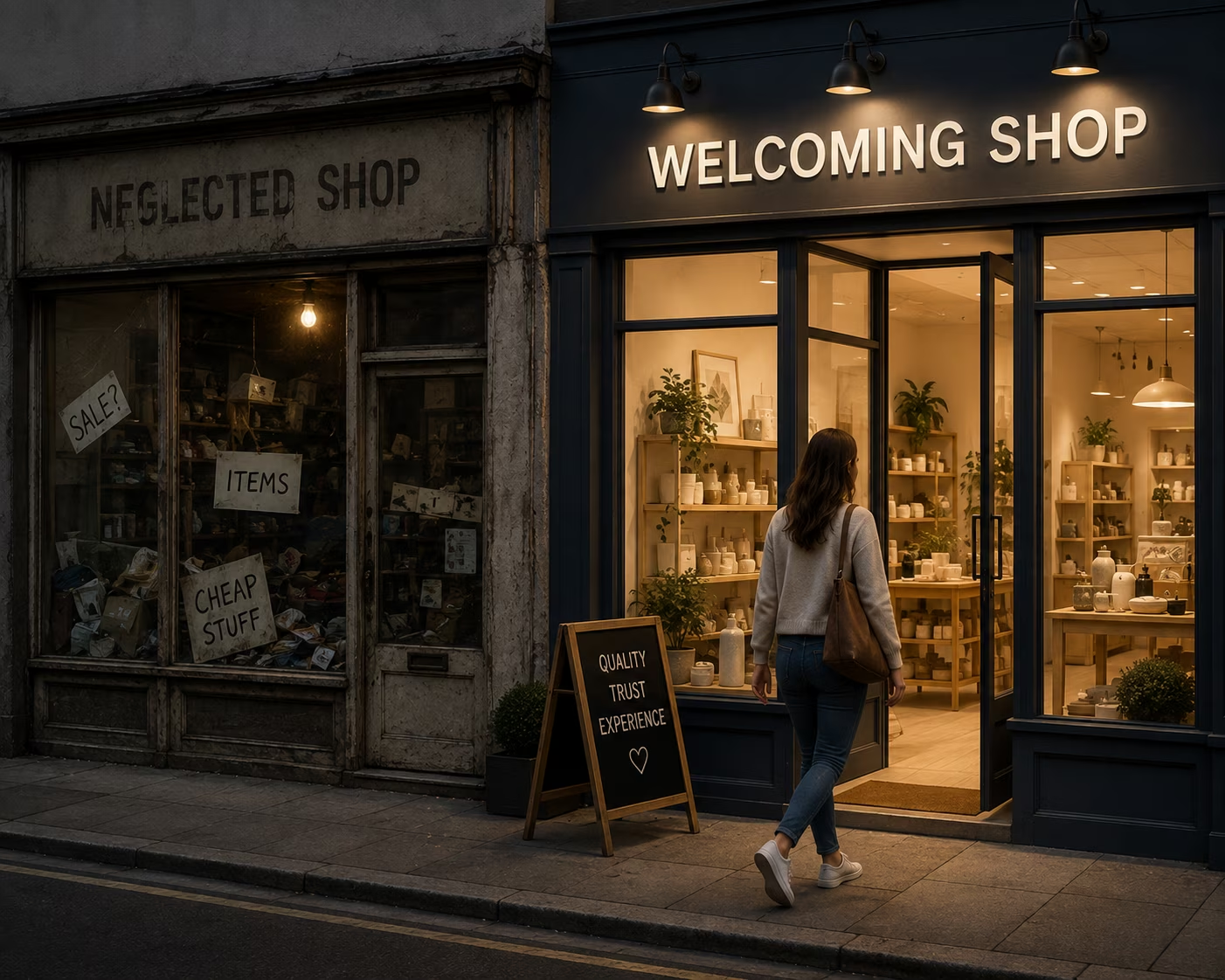
You've swapped chaos for neglect. Neither one grows a brand.
The three things an exclusive distribution partner should prove
Before anyone gets the word exclusive near your Amazon channel, they should be able to demonstrate three things. Not promise. Demonstrate.
They can protect your pricing. Ask them to explain, specifically, how they'll hold your price when a grey-market seller lands on the listing at 20% under RRP. If the answer is a shrug or "we'll report them", they don't know the job. Holding price on Amazon means tracing leaks to their supply source and closing them, and a partner who can't describe that process will be learning it at your expense. When we took over a brand running nearly 30 sellers across its listings, getting it to a controlled buy box of 2 was the work of months of test buys, ledger-tracing and awkward conversations. Anyone who's actually done it can tell you war stories. Ask for them.
They can protect how the brand shows up. The listing is a shop the customer can't walk into, and under exclusivity it's a shop with one keyholder. So look at the shops they already keep. Pull up the listings they run today and judge the images, the A+ content, the brand store and the review responses. A partner's existing catalogue is the only honest preview of your future one.
They grow share, not just shift boxes. A distributor's natural instinct is sell-through: move the stock, reorder, repeat. Exclusivity should buy you ambition, with named targets for category rank, new marketplaces and advertising investment. On the brands we run exclusively, ad budgets are ring-fenced and spent, five figures a month on that same brand, with neglected lines up more than 20% and new EU marketplaces opened. Growth is the rent an exclusive partner pays for the privilege. No growth, no exclusivity.
Structure the deal like the sceptic you should be
Even with a partner who passes all three tests, the paperwork should protect you.
Make exclusivity conditional and reviewable, earned in stages against performance rather than granted in perpetuity on day one. Keep your Brand Registry, trade marks and listing ownership with the brand, always, so that if the partnership ends you get your channel back intact rather than discovering your own listings don't belong to you. Define the obligations that come with the badge: content, advertising spend, seller-removal enforcement and reporting you can actually check. And agree the exit before you agree the entrance, covering stock buy-back, handover and timelines, while everyone still likes each other.
A partner who resists those terms has told you everything. Confidence signs performance clauses. Salesmanship avoids them.
Where we stand on this
We don't ask for exclusivity on day one. We earn it.
That's not modesty, it's self-interest, because exclusivity granted early is fragile and exclusivity earned is durable. The brands that hand us a protected channel do it after we've cleared their rogue sellers, rebuilt their content and shown growth against numbers we put our name to. It's why Orellana was built as both distributor and agency, because a partner asking for your whole channel should be paid on whether it grows, not on whether they showed up.
If someone's asking you for exclusivity right now, run them past the three proofs above and see what happens. We hold exclusivity for the brands we run and we sign the performance clauses we've just told you to demand, so we'll give you a straight read on the deal in front of you — even if the honest answer is that it isn't us.



.png)
.png)

.svg)