








There's a moment that happens thousands of times a day on Amazon.co.uk and almost never shows up in anyone's dashboard. A shopper finds your product, likes the look of it, hovers over the buy button. Then they open a second tab.
They search your brand name. They check Trustpilot. They skim a Reddit thread from 2023 where someone asked "is this stuff actually any good?". Then, and only then, do they decide whether you're worth the risk.
If you're selling on Amazon UK with a playbook built for the US, that second tab is where your conversion rate quietly dies. Because the UK shopper is not a smaller, politer version of the American one. The buying psychology is different, and so are the mistakes that get punished.
The problem with being the cheapest
In the US, aggressive pricing is often rewarded. Undercut the category, win the click, let volume sort out the rest. Plenty of American brands have built real businesses that way.
Try it in the UK and something odd happens. Price your product way below the established names and the British shopper doesn't think "bargain". They think "why is it so cheap?". To a British eye, a price well below the competition reads as disposable. Landfill in a nice box.
This is a country that came up with the phrase "buy cheap, buy twice" and genuinely lives by it. UK shoppers will happily pay more for something they believe will last, but they need a reason to believe it. Which means the race to the bottom that dominates so many Amazon categories actively works against you here.
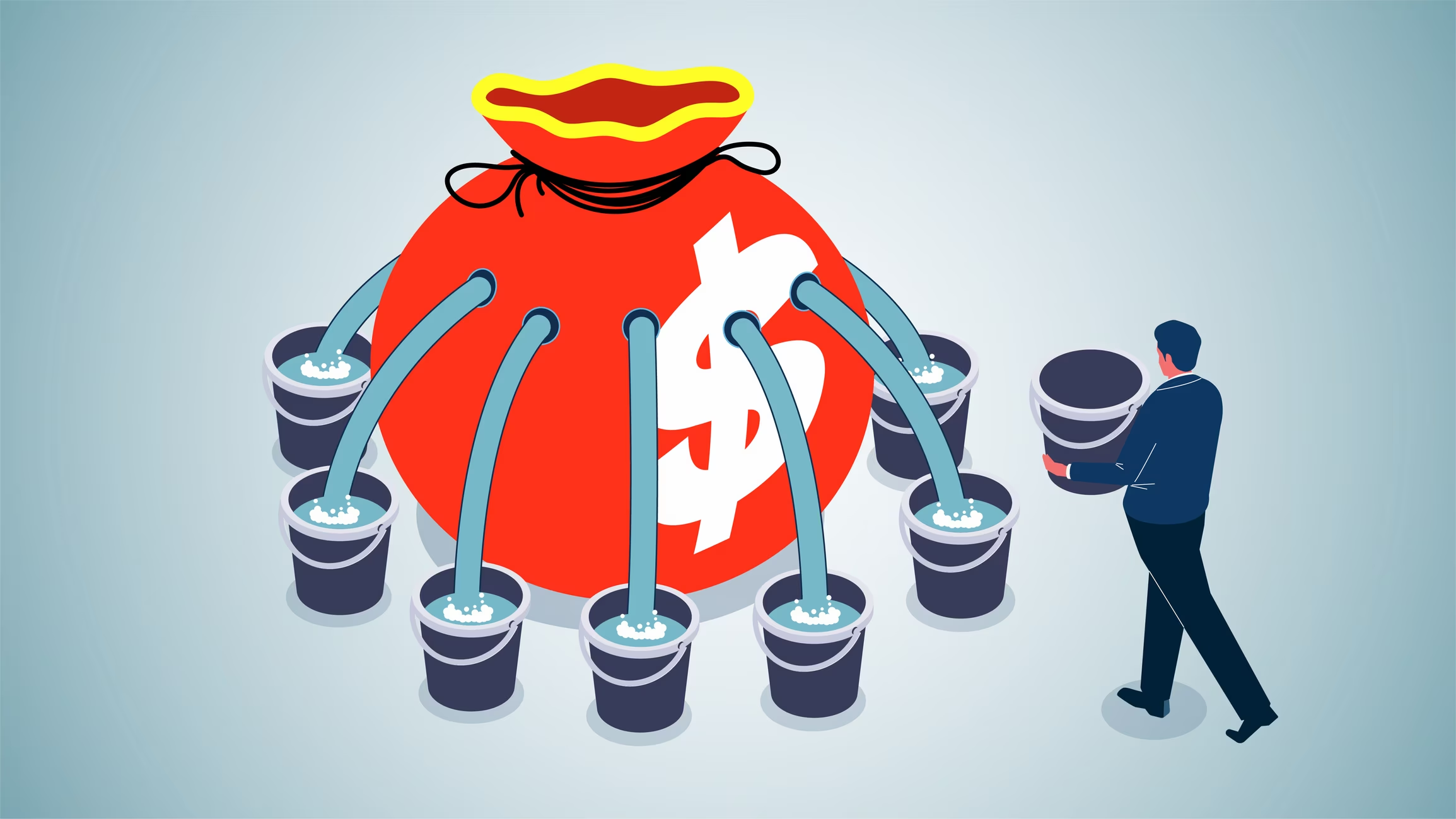
And this is where pricing stops being a marketing question and becomes a control question. If a dozen resellers are undercutting each other on your listing, the UK shopper sees a brand that doesn't look after itself, at a price that keeps confirming their suspicion. We've written separately about why your Amazon price keeps falling, and the short version is that it's a distribution decision, not an Amazon setting. In the UK, the cost of getting it wrong is doubled, because the low price damages trust as well as margin.
The trust check happens off Amazon
American shoppers largely trust the Amazon ecosystem to police itself. Star rating, review count, Prime badge, done.
UK shoppers use those signals too, but they don't stop there. Trustpilot carries real weight here in a way it simply doesn't in the US. So does a quick Google of your brand name, a look at whether you have an actual UK web presence and increasingly a search on Reddit or Mumsnet, where the tone is sceptical by default and the verdicts are brutal and permanent.
The practical implication is uncomfortable for a lot of brands: your Amazon conversion rate is partly set by pages you don't control and have possibly never read. A brand can have a polished listing, decent reviews and solid photography, and still leak sales to a two-star Trustpilot profile they didn't know existed, fed by delivery complaints from a reseller they never authorised.
That last part matters. When unauthorised sellers handle your product badly, the UK shopper doesn't blame the seller. They blame you, and they say so on a platform where the review sits forever. Channel control here covers more than price. It decides who gets to create the evidence that the second tab turns up.
Packaging is a verdict, not a transaction
Here's an observation from years of shipping products into British homes: Brits open the box before they trust the product.
Unboxing in the UK is a small ceremony of judgement. The weight of the box. Whether the print is crisp or slightly off-register. Whether the thing inside is cradled or rattling around in a void of air pillows. None of this appears in your listing, and all of it decides your review score.
A product that arrives in flimsy packaging has already lost the argument, however good it is. The customer decided "cheap import" somewhere between the doormat and the kitchen table, and the four-star-instead-of-five review writes itself. Multiply that across a year of orders and packaging becomes one of your biggest conversion levers, because reviews are the one part of your listing you can't write.
The fix is coherence, not luxury packaging on everything. Premium price, premium listing, premium unboxing. The moment those three tell different stories, the UK shopper believes the worst one.
What this means for selling on Amazon UK
Pull those threads together and a strategy falls out of them. Not a complicated one, but a distinctly British one.
Hold your price and justify it. Don't chase the cheapest rival down; explain in your images and A+ content why you cost more, because the UK shopper is actively looking for that justification and will reward you for providing it. Certifications, materials, guarantees, country of origin. Specifics, not slogans.
Mind your off-Amazon shadow. Claim your Trustpilot profile. Make sure a Google search of your brand finds something reassuring. You can't control Reddit, but you can make sure the honest answer there is a good one, which mostly means controlling who sells your product and how it arrives.
Treat packaging as part of the listing. The listing is a shop the customer can't walk into, so the box is the first time they physically meet you. Make that meeting match the promise.
Control the channel before you spend on it. Every trust signal above gets undermined by a messy seller list. One controlled buy box, one price, one standard of fulfilment. Then advertise.
The upside nobody mentions
All of this sounds like the UK is a harder market. It is. It's also a better one, if you're the kind of brand this blog is written for.
Because a market that punishes cheap-and-nasty is a market that protects brands who do things properly. The scepticism that makes UK shoppers slow to trust also makes them loyal once you've earned it, and it builds a moat that a container-load of knock-offs can't cross. A bigger competitor can outspend you in the US. Over here, spend doesn't buy trust.
We've seen this play out repeatedly. A certified product we launched was losing to uncertified, cheaper rivals right up until the listing actually explained the certification, and it went on to grow sales 88% in under twelve weeks. The product hadn't changed, only the evidence had. That's the UK market in one story: nobody was refusing to pay more, they were waiting to be given a reason.
Most brands think their UK problem is a marketing problem. Usually it's a control problem wearing a marketing costume: the price is sliding because the seller list is a mess, the trust signals are weak because nobody owns them and the ads are pouring traffic into all of it.
If you're a US brand eyeing the UK, we've written a blunter companion piece on what US brands get wrong before they've started. And if you'd like to know how we approach all of this as both distributor and agency, that's the piece that explains the model.
Orellana is UK-native. We didn't have to research this market's habits, we live here. If your brand is doing well elsewhere and underperforming here, there's usually a specific, findable reason.



.png)
.png)

.svg)